
Hi everyone, my name is Andrew. I am currently a second year medical student at The Warren Alpert Medical School of Brown University, with an interest in trauma and spine surgery. I am excited to be involved with Archimedes Advising and help students who were once in my shoes. A little bit about me… During my time at Brown I served as a student admissions representative for undergraduate admissions for 2 years. Afterwards I worked with Crimson Education helping students with extracurricular strategy and essay editing etc. I am proud to say that my former students all received admissions into top BS/MD or undergraduate programs and I continue my track record here with Archimedes Advising.
A Brief Introduction to PLME
You’re probably here to learn more about PLME. As you may know, PLME is the only 8-year BS/MD program in the Ivy League and is arguably the most prestigious BS/MD program out there (especially now that Northwestern and BU shut down). For better or worse PLME does not do medical school interviews. The program also offers a binding Early Decision option. While the acceptance rate is slightly higher compared to Regular Decision, typically only around 20 students get into PLME each year via ED. If you’re accepted to Brown under ED but not PLME, you are still bound by the ED agreement to attend Brown… but honestly, who’s going to complain about going to an Ivy League?
How to Stand Out for Admissions
A brief background about the application review process. First your application is reviewed by undergraduate admissions. If you pass the initial screening, your file goes to a review team composed of practicing physicians, medical school deans and medical students, many of whom are former PLMEs.
Since there’s no interview, your writing must demonstrate maturity. Let’s be real: the biggest concern admissions readers have is whether a bright-eyed 17 or 18 year old understands what they’re signing up for. Medicine is a long road. After 8 years of education, you still have 3–8 years of residency and fellowship. You’re committing your entire adult life so far to this path. So when they ask Why medicine?, “I like helping people” or “My mom is a doctor” isn’t going to cut it. Really reflect: Are you choosing this dream or is it your parents wanting something to flex about on WhatsApp/WeChat later?
Shadowing and volunteering are your best sources of insight here. No one expects you to know how to do anything (just shut up and stand next to the door/trashcan). But what do you think when you see a physician deliver life-changing news? How does it feel to stand in an OR under blinding lights for 8 hours straight? Do you want to spend decades doing this? What does proximity to life and death make you feel about your own mortality?
For volunteering, the key is being close to patients. Aim for a couple hundred hours over your 4 years. Consistency over all 4 years counts. Even if you are just helping someone find their way or bringing water to a patient, what did the interaction teach you about the relationship you hope to build with your patients someday?
Again, to reemphasize, you must show clear evidence that you understand the realities of medicine and that your motivations come from genuine experience, not parental pressure or vague idealism. Show how your clinical experiences changed you, how you think about patient care, and how PLME’s philosophy aligns with the kind of physician you want to become.
Research
Research has become honestly pretty ridiculous. There are companies that will slap your name on a no name journal for the low low price of five figures. If that is you, congratulations on winning the genetic lottery and being born into a wealthy family. Unfortunately, research access is highly dependent on socioeconomic status and geography.
If you don’t have connections, cold email. Don’t mass-spam a department with the same generic templates begging for research, instead actually read about a few professors, reference a specific project, and show genuine interest. Even if you barely understand the science and need to google every third word, demonstrating curiosity will set you apart from the crowd.
If you do have family connections obviously use them (no shame do what you have to do) but if all your publications are with people with similar last names… you will likely be silently judged as a “nepo baby”. One publication in high school is already extremely impressive. If you somehow have five papers but no major research awards… something is off. Admissions readers know you are not curing cancer in high school. So it raises the question of how much you actually contributed and if you were just tacked on as a middle author. If you really want to flex that you are at the pinnacle of high school research then you need some awards to back that up (think STS ISEF etc).
On the flip side, if you have limited access do not panic. Admissions is holistic. You are evaluated in the context of your surroundings. If you have no local options, one really strong alternative is learning some applied math or computer science. So many doctors need statistics or coding help and you can do those projects remotely. Also in general free or funded summer programs are more respected than pay to play ones.
PLME Life
Overall PLME is an incredible program with a great support system. Research is ridiculously easy to get involved in and there is funding during the semester and during the summer.
What makes PLME really unique is how integrated we are with the medical school. As early as freshman year, you can take pre-clinical electives alongside med students. Sure the lectures were way above my knowledge level at that time, but the early clinical exposure gave me perspective most premeds do not get until years later. Shadowing is also extremely accessible, and Brown’s health system serves as the primary hub for a huge region, including the only Level 1 trauma center within 50 miles. While traditional premeds are grinding for med school admission, you get four years to explore what kind of physician you want to be. That head start is huge once you get to AMS.
Personally, I very much valued the freedom and flexibility to explore both in and out of medicine early while still having the space to grow as a college student. PLME offers the stability of a guaranteed medical pathway paired with an unusually broad academic freedom. You can study anything you want, even design your own concentration, and explore your passions without restrictions. In my case, that freedom let me pursue research that fascinated me and also seriously consider other career paths like consulting or finance that I thought might pull me away from medicine. But after actually trying them, I realized nothing resonated with me the way patient care and the profession of medicine did. That exploration didn’t weaken my interest, but rather confirmed for me that medicine was genuinely the right career choice, not just the default or an expectation I inherited from others.
Final Thoughts
If you are applying to PLME you are already doing something amazing. Keep going. Write with honesty. And really think about why you want this path because once you commit you are fully in it (I mean technically you could always sell out later but you get the point).
And a quick reminder. During the application process it may feel like getting into PLME is the final boss. It is not. Getting accepted is just the beginning of a career that only becomes more challenging and more demanding. You are choosing a path that requires you to keep showing up day after day even when it gets hard. So make sure you are choosing it for the right reasons.
If you are here from Reddit then you already know Kyle knows his stuff. He is the reason so many students trust Archimedes Advising and I am really excited to work with him and help the next generation of students become future physicians.
About the Author:
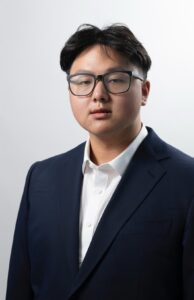
Andrew brings two years of experience at Brown University Admissions Office as a Student Admissions Representative and three years as a tutor and application counselor with Crimson Education. He has mentored students who went on to earn acceptances at Stanford, Harvard, Yale, UPenn, Princeton, Berkeley, Oxford, Cambridge, Johns Hopkins, and competitive BS/MD programs including Rochester REMS, Pitt GAP, Brown PLME, and Case Western PPSP.
About Archimedes Advising:
Archimedes Advising is a specialized admissions consulting firm dedicated exclusively to helping highly motivated high school students gain acceptance into the nation’s most competitive BS/MD, BS/DO, and premedical undergraduate programs. Archimedes Advising was founded in 2024 by Dr. Kyle Dobiszewski, a former BS/MD program director who has been involved with BS/MD, BS/DO, BS/DMD, BS/DPT, etc. admissions since 2014. Unlike general college counselors who cover a wide range of majors, we focus almost exclusively on medical school pathways, giving families deep expertise in program selection, application strategy, interview preparation, and positioning. Our results-driven approach has delivered exceptional outcomes, including 22 BS/MD acceptances by our 13 clients in the most recent cycle, with students earning spots at top programs such as Brown PLME, UMKC BA/MD, Penn State/Jefferson PMM, Rutgers-NJMS BA/MD, and Pitt GAP, among others. We combine data-driven insights with highly personalized guidance to ensure the success of our clients. For parents seeking a strategic, high-touch partner who truly understands these ultra-competitive programs, Archimedes Advising offers the focused expertise and proven results that general advisors simply cannot match.